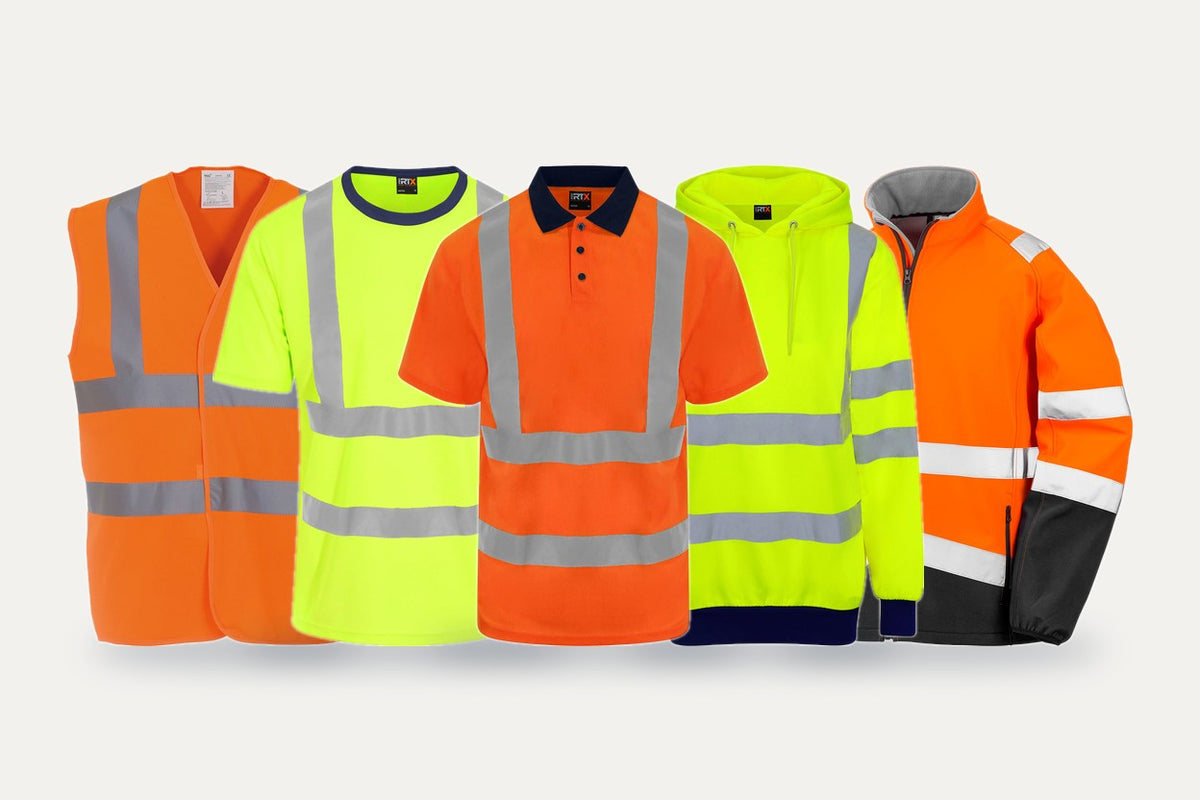
Every hi-vis garment sold for work in the UK carries a class under EN ISO 20471, and the class is not a quality grade. It is a measure of how much of the garment is fluorescent fabric and reflective tape, and therefore how far away and how reliably a driver can see the person wearing it. Picking the wrong class is the commonest mistake in a workwear order, so here is what the numbers mean and where each one applies.
The three classes
Class 1 is the minimum: at least 0.14 square metres of fluorescent material and 0.10 of reflective tape. It covers small garments such as hi-vis trousers, some vests worn with other hi-vis, and a few polos. On its own it is for low-risk settings, car parks, warehouses and slow traffic.
Class 2 is the everyday standard: 0.50 square metres of fluorescent material and 0.13 of tape. The classic two-band-and-brace vest is Class 2, and so are most hi-vis polos, t-shirts and short jackets. It is what a construction site, a delivery yard or a roadside job at normal speeds asks for.
Class 3 is the highest: 0.80 square metres of fluorescent material and 0.20 of tape, which in practice means sleeves. Bomber jackets, parkas, long-sleeved polos and fleeces with reflective tape on the arms reach Class 3. It is required on high-speed roads, motorways, airports and anywhere people work in poor light. Two Class 2 garments worn together do not make Class 3 unless they are certified as a set.
Rail is a separate standard
Work on or near the railway needs garments that meet RIS 3279-TOM as well, which specifies orange fabric and its own tape layout. A yellow Class 3 jacket is not rail-compliant however good it is. On our product pages the rail rating is listed where the manufacturer certifies it, usually on the orange colourway only.
Branding hi-vis without losing the class
A logo on hi-vis is normal and legal, but it counts against the fluorescent area if it covers too much. Keep a chest logo small, keep any print off the reflective tape, and on a vest put the company name on the back between the bands rather than across them. Print is the better finish on hi-vis because it sits flat; embroidery is fine on the plain chest panel of a polo, fleece or jacket. Our product pages show the logo at its real size on the garment before you order.
Which class should I buy?
- Warehouse, car park, events, low-speed yards: Class 2 vests or polos.
- Construction sites and roads up to normal speeds: Class 2 as a minimum, Class 3 for anyone near moving plant.
- Motorways, dual carriageways, airports, night work: Class 3 jackets and trousers.
- Railway: RIS 3279-TOM orange garments.
All of our hi-vis workwear lists its class on the product page, and every garment can be printed or embroidered with your logo in-house. If you are not sure what your site requires, the site manager's risk assessment will say, and we are happy to check a garment against it before you order.
More news

Personalised Mugs for Your Business, From £4.99 With the Print Included
An 11oz mug with your logo or your own design is £4.99 with the print included, and less by the box. How the mug designer works and what the quantity prices are.

Workwear Packs: Ten or More Garments With the Logo Free
A pack is one line on the order: ten or more of the same garment with your logo printed on every one at no extra charge. How they work and when to use one.

Winter Workwear: How to Layer a Crew for the Cold
One thick coat is the wrong answer. How to build a winter uniform from layers that come on and off through the day, and where the logo goes on each.

Kids' Hi-Vis Vests for Schools, Nurseries and Clubs
A line of children in bright vests is easier to count and easier to see. Vest or tabard, which colour for which group, and how a class set of thirty works.

Portwest Workwear: What the Range Covers and Who It Suits
Portwest is the brand a site crew is most likely to be wearing already. What is in the range, how the trouser families differ, and what can carry your logo.

Regatta Professional: Outdoor Workwear for Crews in the Weather
Regatta's work range brings outdoor-clothing know-how to uniform. The sub-brands explained, what to choose for which job, and where your logo goes.